Tuesday, 9 September 2014

Spirit of Freedom - Vote Yes to that


This blog has always been a mixture of opinions - in general - mixed with views on and experiences of the world of whisky and its culture.

From day one, support and favouritism has been given to the 'wee guy'. We firmly believe that small is beautiful. That doesn't mean that big = ugly but really you can't beat something close and tangible to something that's distant in all meanings of that word.

Recently, the media made much of 130 'Scottish' companies who opposed Scottish independence and 200 who are in favour of it. Amongst the names on both sides were some from the whisky world.

Two of the names I noticed were Inver House distillers - in opposition to independence - and Springbank who see it as a golder opportunity. Inver House distillers produce many fine whiskies. But, how to they compare to the well respected Springbank?

This is from Wikipedia's page on Inver House:
Inver House Distillers Limited is a Scottish malt whisky distiller, based in Airdrie, North Lanarkshire. The company is now a subsidiary of Thai Beverages, one of the largest alcoholic-beverage companies in South East Asia, with a market capitalisation in excess of US$4bn.
Inver House Distillers is a leading distiller of single malt whisky, owning and operating five distilleries: Old Pulteney Distillery, The Speyburn-Glenlivet Distillery, Balblair Distillery, Knockdhu Distillery and Balmenach Distillery.
This, from Sprinbank's Wiki page:

Springbank is one of only two distilleries in Scotland to perform every step in the whisky making process, from malting the barley to bottling the spirit, on same premises: the other is Kilchoman Distillery who also grow their own barley. While a few others still maintain the first step in the process, the malting of barley (which is becoming more rare), Springbank also bottles their own whisky.

Springbank is one of the few remaining family owned distilleries. Nearly all of its whisky is sold as a single malt, with little of it finding its way into blends. Most blends are produced by larger conglomerates who tend to use the single malts from the distilleries that they own in their blends. Springbank produces two of its own blends, 5 year old Campbeltown Loch, and Mitchell's 12 year old.
So, here we have it. One group of distilleries is owned by a 'faceless' international conglomerate and the other is, well, independent. As to the whiskies themselves, all have their qualities though personally I have found in the last two years that my whisky purchases increasingly include those from the Springbank stable. The new Longrow Red is likely to be my next.

Quoted in the Scotsman, Neil Clapperton of Springbank:

But Mr Clapperton, managing director of Springbank Distillers, said: “The Scottish whisky industry has nothing to lose and everything to gain from independence. Whisky is an iconic Scottish product hugely important to our economy. It accounts for a quarter of all UK food and drink exports, earning £135 every second.

“We must do all we can to support every stage of its production here in Scotland, from our barley farmers through to our whisky producers. I am certain that is best done as a normal nation with the full powers of an independent country.”

He warned: “The biggest threat to the whisky industry comes from the in/out European Union referendum the UK is planning, and the fact this could close EU influence in getting whisky into foreign markets.”

In the pro-Yes letter, the Springbank boss and others state that “independence is in the best interests of Scotland’s economy and its people”.

As with crofting communities, local ownership has to be the preferred option for whisky distilleries if they seek to benefit the local community as well as those with vested interests, financially, in the business.

This must count for nations as well. There is always uncertainty and there will be whether or not we vote yes or no to our self-determination - not least will we see a Tory-Ukip coalition in Downing St that takes us out of Europe whether we like it or not. However, at the end of day, do we want to leave control over important issues to a handful of distant millionaires or do we trust ourselves to do what's best for our country.

Who should deal with...
  • welfare? Who is best placed to provide for our pensioners, working families, disabled, students as well as those without work?
  • pensions? Why are we working longer and paying more to receive smaller pensions when we can 'afford' an unelected House of Lords with 800 members who receive £800 a day expenses?
  • political priorities? Is it really necessary for the UK government to spend £billions on Trident and more recently, £4billion on 600 armoured vehicles?! Or could we provide something more tangible to our citizens in the form of more nurses, doctors, teachers and better public transport?
  • our wealth? Whisky apparently brings in £130 per second to the London treasury. Oil, tourism, the financial sector, food, research, technologies and renewable energy adds to this wealth. Do we trust ourselves to spend it according to our needs or do we leave it to a succession of Westminster governments who have, arguably, wasted it for the past 40 years?
I have always been decided on this issue. But for those who aren't, I am reliably informed that the Wee Blue Book is an invaluable source of information on what Scottish self-determination could look like.

Otherwise, vote Yes on September 18. Then, enjoy a dram or three at the mother of parties that will follow a Yes vote and look forward to a bright new future.

Monday, 21 April 2014

Redemption in Uigeadail


Holiday time and a trip through duty-free sees me in 'boy in sweetie shop' mode. Edinburgh Airport's selection doesn't seem to be what it used to though. There is variety but much of it seems to be underwhelming 'travel-retail only' from some of the industry's big guns who jump at the chance to proffer a new name or two with no age-statement and the auld ABV of 40%. Some of it is more or less the same stuff you can buy in a local supermarket except that here you have 'trained' sales-rep types mangling the Gaelic names on the likes of Glenlivet or Glenmorangie.... "La Santa? You mean LASanta?!"

I had decided beforehand that the bottle to keep me warm on this holiday would be the Bowmore 100 Degrees Proof or maybe the Ardbeg Uigeadail. The absence of the Bowmore rendered the decision an easy one.

Ardbeg though has been disappointing of late. Last year's purchase of the Corryvreckan was a mistake. It was underwhelming. More so when I had the choice of the Uigeadail. It may be another NoAgeStatement but it's reasonably priced and it's a flaming great dram. It has a fabulously filthy flavour if you excuse the alliteration. Oily with flavours of TCP, dirty leather and the old Portobello swimming baths back when they were filled with seawater from the Firth of Forth. On top of the peat though there's a little sweetness. It's drinkable at the ABV of 54.2% though a smidgen on water does no harm.

Here's hoping Ardbeg get back to the robust and direct approach to whisky that gave us Renaissance and Airigh nam Beist as well as Uigeadail. An approach that married simplicity with complexity without over the top marketing or cask-strength gimmickry.

Thursday, 2 January 2014

Bread, beer and whisky from one year to the next


What else do you need for the glum darkness of a Scottish December as it merges into a new year?

I hardly ever make any sort of bread but seeing a recipe on Innis & Gunn's site for their IPA bread gave me renewed confidence in my baking skills. The recipe here, worked a treat. For good measure, I threw in a variety of other ingredients to add interest to the mix and to 'beef' it up a bit - black Greek olives, pumpkin seeds, sunflower seeds and some battered brazil nuts. I'm not usually an IPA fan - tastes too much like a bunch of flowers for me - but Innis & Gunn's habit of maturing their liquid in casks makes this the most palatable.


Around the same time, a triple barrelled package with a combined age of 67 arrived from Whiskybroker. Though myself and others were disappointed that the promised Macallan didn't materialise, due to price apparently, the other releases were both of significant interest and high quality.

Having exhausted my previous bottle of grain, the Invergordon 25yo was a welcome addition to the shelf. It has all the hallmarks of an aged grain - smooth, creamy with lots of vanilla but this one has a little lemon zest in there.

In all my years of imbibing, I had never knowingly drank an Auchroisk. Whiskybroker's 21 year old is an excellent place to start. Smooth, sweet and so damn tasty with a wee hint of wood.

Lastly was the 21yo Ardbeg. Much sought after though more so for the reputation of it and the perceived kudos at having such a bottle on the shelf. The nose is fantastic - lots of peat and saline that takes me back to Airigh nam Beist. As is usual for the age, the peat on the palate is not as pronounced but is there nevertheless. Dignified and quiet and well worth it at the price.

And there's enough left over for an impending Burns' Nicht.

Tuesday, 29 October 2013

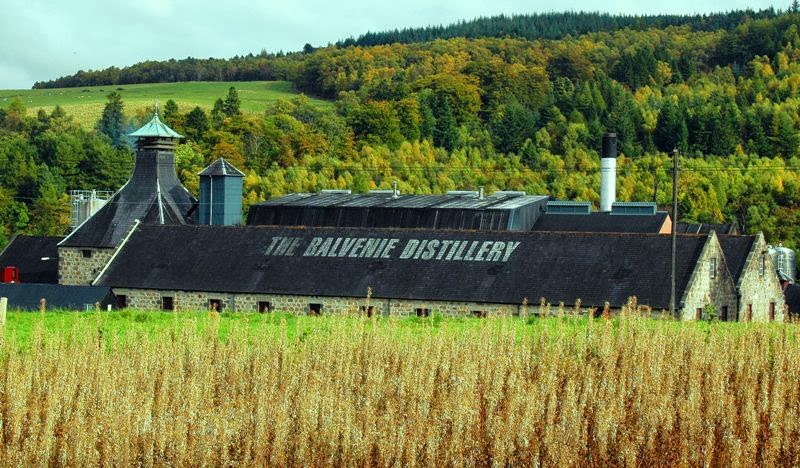
Speyside #3: Balvenie/ Kininvie and Glen Moray


At £35, it ain't cheap compared to some distillery tours. It's also worth every penny. Balvenie may have a reputation as a 'classy' whisky but the tour takes us to all the dusty and damp recesses while coating your tongue with beautiful tasting liquid.


Malting
The tour lasts nigh on three hours. Malt is tasted and wash savoured. Practises are explained without too much air brushing. Despite being almost a home boutique distillery, it is admitted that the core expressions for the mass market are tankered off to be bottled near Glasgow.


The kiln
Kininvie new washbacks
In the much vaunted Warehouse 24, visitors get a chance to taste three whiskies straight from the cask as well as bottling a 20cl with your chosen liquid. All are around 12yo with one sherry, one first fill bourbon and one refill bourbon. The first fill bourbon is pretty good. The other two are outstanding. Further to this, members of Balvenie's fanclub, 'Warehouse 24', are entitled to a complimentary dram. 'Not bad' I thought. However, when presented with a dram of a 39yo, distilled in 1974, I was more than happy. A superb and classy aged Balvenie with just a hint of peat. Does life get better?

While on the tour, it was hard to avoid noticing the references here and there to Kininvie - a 'distillery' which I understood to be 'closed'. It is anything but. Whether or not it counts as a separate distillery, I don't know. Maybe it's more like Balvenie's bidie-in that labours away in the background making 'industrial' malt for blending. Whatever, we also get treated to the sight of new washbacks being installed for Kininvie. A statement in itself, no?

At work in the cooperage

Balvenie stills
The tour is rounded off with a 5 dram tasting, including the renowned and expensive Tun 1401. What more could a whisky novice or connoisseur wish for?

As it says on the tin


For us, the whisky day is completed by a visit to Glen Moray. I've always viewed GM as a 'cheap' and perhaps unappealing dram. Possibly because I can recall purchasing a bottle for £14 many years ago and before I my whisky palate had developed. This view changed upon tasting both their peated spirit and 8yo cask-strength Chenin Blanc cask at the Whisky Fringe two years ago.

Their indepth 'Fifth Chapter' tour being unavailable we were nevertheless determined to visit the shop with a view to purchase something tasty. Unfortunately, the 30yo at £70 had sold out funnily enough. However, a chance to bottle a 9yo straight from a Chenin Blanc cask at £45 was too good to pass up. A lovely, mouth-filling and sweet whisky.

Respect to Balvenie and Glen Moray.

Speyside virginity lost
Speyside #2 - Lost and Reborn

Thursday, 24 October 2013

Speyside #2 - lost and reborn


On the road between Ballindalloch, I like it how signs point you to airts and pairts with 'distillery' names such as Benrinnes, Dailuaine, Knockando and Glenallachie. All seem to be closed to visitors though unless you manage to get lucky during the Speyside Whisky fest.


They once were neighbours.
It doesn't stop you from distillery spotting though. And maybe this is the difference between whisky and train aficionados - getting into a distillery, sniffing the mash tuns, viewing the stills and sampling from the cask in a cold dank warehouse must be the equivalent of driving your own steam engine instead of just watching it from the concrete.

We take the road to Dailuaine/ Carron and are soon rewarded by the sight of Dailuaine's warehouses. The product of this distillery that I've tasted has so far been pretty good. Not least the recent offering from Whiskybroker. It's certainly a busy place though even though the industrial appearance of the plant leads one to figure that the 'green meadow' or dail uaine (da-il oo-ine-ye) lies outwith the distillery boundaries.

We follow the steam from Dailuaine further down the glen to find it hanging over the Site Formerly Known as Imperial. Memories of a Gordon&MacPhail 13yo sherry cask Imperial come flooding back. Beautiful stuff, Unfortunately, the status of Imperial went from 'mothballed' to 'demolished' in January of this year.
What remains of Imperial

The dunnage warehouses still stand and perhaps that's a fitting testament to a famous auld whisky. However, a new distillery is rising from the soil. What will it be called? No-one seems to know but one or two locals claim that 'Glen Carron' could be a good bet.

Rising from the ashes - Glen Carron?
One long gone whisky with the parent distillery - buildings at least - still intact is Parkmore. Taking the road from Dufftown past Glenfiddich and Balvenie Castle you soon spot the revived Speyside Railway track parallel to the road. The pagodas of Parkmore stick up from the glen below. Visually, it is a living tourist brochure. Though departed distilleries understandably pull at the heartstrings of many it seems as if Parkmore's product was so poorly regarded that the remaining casks of it were smashed when the distillery ceased distilling. As Whisky Dufftown puts it:
Built in 1894, Parkmore has been silent since 1931 because of problems with its water source. Although the maltings were in use until the late 1960's and the warehouses are still in use today. Parkmore's whisky is no longer available - it is reputed that all the casks remaining in the distillery were smashed when it closed.
Parkmore's postcard view
Fleeting visits are paid to Cragganmore and Strathisla as well though time doesn't allow for tours to be undertaken. Craggamore has a few people in already but the welcoming ladies on duty still offer us a dram anyway. Strathisla is a graveyard with one bored guy staffing the visitor centre. Despite the lack of interest from the public and our interest in products and tours, we don't get offered a sniff. It's a PR win for Cragganmore.

Fortunately, memories of a stingy Strathisla are erased by the following days tour of Balvenie...

#1 Speyside Virginity Lost

Sunday, 20 October 2013

Speyside virginity lost


More or less. Having 'done' Islay as well as the south from Glenkinchie to Bladnoch and the southern and eastern Highlands, my experience of Speyside whisky in its own domain has been pretty fleeting. So, a trip to Speyside for the autumn break beckoned and it didn't disappoint. Even better, the Scottish autumn was glorious.

The road north from Perth through Blairgowrie and Braemar on the way to Srath Spè is a stunning highway to the north. For a whisky geek the only thing that can better the autumnal trees of Perthshire is the glut of well-kent names on the map as you approach Tomintoul.

Speyside sheep block the road to Allt a' Bhainne.
With our but'n'ben sitting in Glen Rinnes, the first distillery encountered was the auld timer of Tamnavulin in the hamlet of Tomnavulin. To the locals a generation or two back, it was Toman a' Mhuilinn - the little hillock of the mill. Unfortunately to whisky travellers, the sign in English said 'closed to visitors'. Despite this, seeing the source of a famous Scottish whisky, in the flesh so to speak, still gives the whisky geek a wee thrill. It's probably like train-spotting. Within a few miles of the house, we had the aforementioned Tamnavulin, Braeval (or Braes of Glenlivet as it was), Glenlivet, Allt a' Bhainne, Tomintoul, Benrinnes and Glenallachie. Cragganmore, Glenfarclas and the whisky metropolis that is Dufftown were only slightly further afield.

As we soon found out, this a feature of travel around Speyside. Especially if you take some of the back roads. Distilleries seem to loom up every few minutes.

Despite most lying in 'hidden' glens it is difficult to find much romance about many of them. Most are simply factories with the kind of architecture you'd expect from factories that were built or re-built in recent decades. For every Strathisla there's an Allt a' Bhainne and Aultmore.

What counts though is the welcome, the experience and the liquid.


First stop for a tour was the famed Aberlour. As the Founder's Tour was all booked, I had to settle for the Aberlour Experience. As experiences go, it's not a bad one. Indeed, for a standard tour it is worth the £12.50. Having been rebuilt after a fire as well as modified and enlarged, the architecture is a bit grim save for one or two buildings of the old 'vernacular' which are more pleasing to the eye. We get a glimpse inside one of the warehouses but that's as far as it goes.

The tasting though is excellent. 6 drams including a decent measure of new-make spirit. We also get the two single-cask cask-strength drams that are available for bottle your own - these are both 16yo with one first-fill bourbon and one sherry. The bourbon has a nose that I could caress all day - the taste and finish don't reach such heights though. The sherry is an all-round stoater. It is purchased and comes with its very own whisky coffin. The 12yo French release at 43% is like juice in comparison. The 16yo follows before we finish with the mighty A' Bunadh.

The next day sees us leave one distillery that is very much alive to encounter two that are in different stages of death-rebirth or even a zombie-like purgatory.

Sunday, 18 August 2013

Whisky Fringe benefits


The coming and going of this year's Whisky Fringe has more or less consigned Summer 2013 to history. Autumnal nights of log fires, drams and Nordic-noir beckons as the nights begin to fair draw in again.

As always, a superb selection of drams were on offer. Having seen the Spirit of the Fringe awards, I have to admit that most of my drams of the day were not on it. Indeed, perhaps there should also be a 'Stall of the Fringe' award for the table that bears the greatest weight of liquid treasure? If there had been such an award this year then surely the Adelphi display of fire power would've blown most of the others across to Fife or least to an overpriced George St wine bar.


Adelphi seem to have a knack of bottling seriously fine malts. This year's offerings were both fine and interesting. A 6yo Glenrothes sherry cask? Lovely. The sherry theme dominated and did not disappoint. The Bowmore 17 was neck and neck with the Caol Ila 9 for me. It was also good to hear that Adelphi expect distilling to start at their new Ardnamurchan distillery in December of this year.

I was also more than pleased to discover a preview of the forthcoming Longrow Red #2. Like the previous offering, this is an 11yo but this one enjoyed its latter years in a Shiraz cask. Wonderful, wonderful stuff yet again from Campbeltown's finest.

The benefits this year included the chance to sample the Brora 32 as well as Douglas Laing's 15yo Laphroaig.

On the downside was the Balcones Brimstone. If you forgive the religious analogy, this is more happy-clappy than in-your-face Presbyterian fury. The absence of Laphroaig and Bruichladdich was also noted as was the failure of Glen Moray to supply a sequel to last years superb Chenin Blanc 8yo cask strength. Never mind, at least I have this years Laphroaig Càirdeas Port Cask to welcome in the dark evenings.

Monday, 11 February 2013

Whiskybroker Braes of Glenlivet 23yo


Don't do notes very often but sharing a dram with a partner who possesses a very advanced sensory system can see vague ideas verbalised in a semi-coherent way. Here goes...

Braes of Glenlivet (Braeval), Single-cask 23 years old, 54.2%, Hogshead 1074 (Whiskybroker)

Tasted neat
Nose: Lovely! Weetabix, lemon and kiwi with cut grass
Palate: rice-pudding with a kind of citrusy shoe-polish taste and texture or maybe a lemony Cowans' Highland toffee? Quite classy.
Finish: fades slowly with some salt and dark fruits - blueberries, prunes?

One to sit and savour. Superb value too. What is there not to like?

Currently available from Whiskybroker for £44.

Friday, 25 January 2013

Burns Nicht wi nae meat


Times change. Haggis no longer has to contain the head, the arse and everything in-between of an animal. Veggie haggis is becoming increasingly popular with both vegetarians and squeamish carnivores. Equally, whisky has come a long way since uisge-beatha was a clear fiery liquid that was matured for days, at best, and not years in a variety of exotic casks.

If we're talking about etymology here, then 'meat' originally meant 'food'. In Old English it was 'mete' and Old Irish had 'mat' meaning 'pig' which is possibly the ancestor of today's Gaelic 'muc'.

I say all this as it seems as if some - who may or may not see themselves as 'tradition bearers' - turn their nose up at the idea of a vegetarian Burns Nicht. While Burns was a man of his time and enjoyed his animal flesh, innards etc, he was undoubtedly open-minded and content to embrace diversity.

Suffice to say that Scotland's various winter festivals can be enjoyed by all regardless of diet.

The Mac na Bracha household enjoyed a veggie Burns Nicht that included more than one dram of  vegan, distilled barley juice.


To eat: Veggie Haggis - MacSweens is by far the best though other varieties can be bought and unlike meat haggis, it can also be home-made quite easily without the need to blowtorch the skin of an animal, split it's head with an axe and scoop the entrails into a mixing bowl - Hebridean life has been described to me in such detail on more than one occasion btw. Mashed Tatties with olive oil instead of butter. Cubed and caramelised neeps. Most Scots kids can remember being forced to eat neeps at some point in their childhood and may recall that mixing it with the tattie rendered it somewhat palatable. I and others can attest that cubing the offending root and roasting it for nigh on an hour makes it very delicious indeed.

A vegan whisky sauce - rice milk, olive oil, white flour, ground oats, wholegrain mustard, a squeeze of lemon juice and some Laphroaig Quarter Cask - topped off the main course.

This was followed by Black Crowdie/ Gruth Dubh - traditional soft cottage cheese rolled in oats and black pepper - some Strathdon Blue and Asda's whisky cheddar accompanied by Shetland Oatcakes.

To drink: Innis & Gunn Rum Cask, Crabbies Black, SMWS 25.62 Rosebank 20 yo, Laphroaig Quarter Cask and Whiskybroker Bowmore 14yo.

Music: Dougie MacLean - Tribute. A Frightened Rabbit EP  - Scottish Winds is surely a song that Burns would've been proud of. And as the inhibitions were chased off into the January night by a sweet and smoky Bowmore, Oi Polloi's Dùisg graced the speakers.

Roll on St. Andrew's Day.

Monday, 8 October 2012

Longrow Red in Lochaber


Whisky is undeniably a product of its environment. In Scotland, in many situations, it is really the only drink to have. Say for example an Autumn break with a bit of walking thrown in and the landscape speaking to you with names such as Buachaille Eite Mòr, Stac a' Chlamhain or an Coire Dubh or the recently rediscovered originals of a' Chàrnaich (Glencoe Village), Baile a' Chaolais or Clo Mhuilinn. In the October sunshine when the mixed woodland around is starting to turn amber, a hipflask of your own last-drop-of-the-bottles-blend cannot be bettered. And, upon retiring to your bothy or cottage, what more could you want than an astoundingly good dram of Longrow?


Tradition is great. But not as a straightjacket. Whisky is a perfect example of an indigenous cultural product that has embraced the wider world. With Longrow Red, you have a Campeltown whisky that's borrowed from an Australian import of an Old World wine. Funnily enough, the Cabernet Sauvignon casks in which this 11 year old spent 4 years, come from the Long Row range of Ozzie wines.

And, it's good. Very good.

So good, that it had the Whisky Frau's nostrils pulsating with joy and her tongue exclaiming that its been a while since she tasted a dram so unusual and yet so damn good. In short, it's got a lot going on.

On the nose we got red fruits - strawberry compote to be precise for the my partner. The sweetness goes a long way to masking the smoke.

On the tongue, there's something a bit dirty and oily. An old leather bookmark maybe? Certainly something you can get your teeth into. On top of that there is another helping of fruit with peat. Strawberry bon-bons in peat stoor?

Finish is longish and unsurprisingly peaty with some more fruit.

Another superb offering from the Springbank crew - still independent and still going strong.

Finally, and back to Lochabar, I am ashamed to admit that I had never realised the extent of the Clachaig Inn's whisky menu. There's no point in going over it all here but should you be in the area, I'd recommend the Ben Nevis 25yo cask strength.


Monday, 6 August 2012

Whisky Fringe - only a year away


So, the Xmas of the whisky year has come and gone. As usual, not one to disappoint despite the new introduction of a standard 1cl measure across the board. I was a bit nonplussed at first but the lower alcohol intake for each dram simply means an opportunity to sample a wider range of malts.

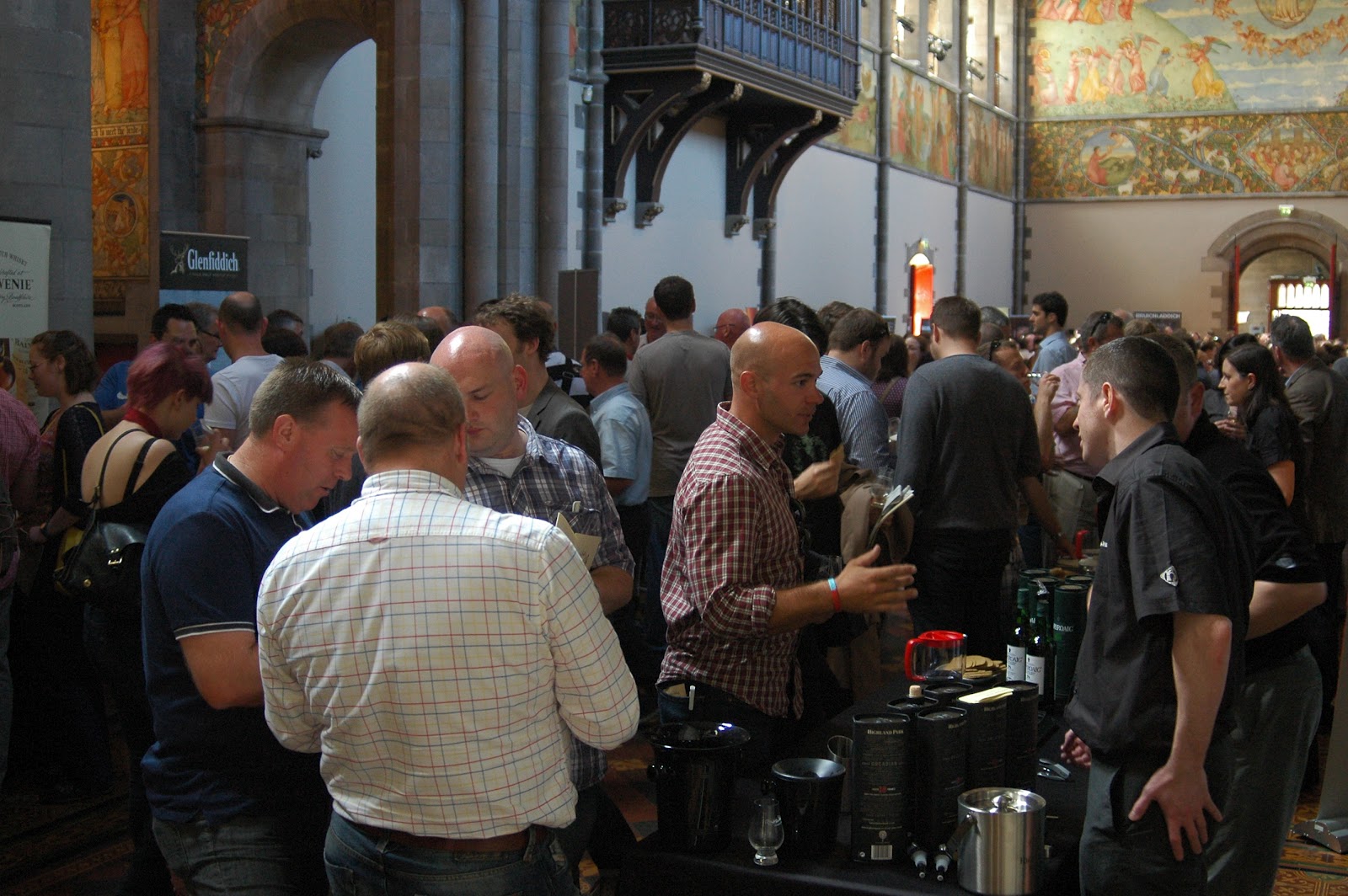
It was busy with lots of non-Scots in attendance - heard a few 'Glendronak' pronunciations from visitors from the south though the Germans and Spaniards present had no bother with the Scottish 'ach'. Lots of female connoisseurs too - the auld days of whisky being principally an auld man's drink are over.

As to the exhibitors, there seemed to be one or two omissions from last year. Sadly there was no sign of Duncan Taylor or Compass Box and while Gordon & MacPhail were present, it was only in their Benromach guise. That isn't a bad thing but G&M have such a wide and varied range of malts and it was a shame not to taste some of the jewels from their deep treasure-chest. Who can forget last year's cask strength Imperial from 1977?

Fortunately, there were still some cracking drams on offer.


My vote, and those of friends, for the Spirit of the Fringe award, went to dark horse that is Glen Moray. The Glen Moray 2003 Chenin Blanc was simply a revelation. Sweet, complex and mouth filling, it had all you want from a dram. A single cask at 60.7%, this will be worth every penny of the £59 they ask for it.

Glendronach had 4 excellent drams on offer but the 1993 Single Cask 19yo was the pick of the bunch and almost the dram of the Fringe. A true sherry monster, it seemed to expand on the palate until your mouth was filled with clouds of sweet vapour - honey, raisins and prune juice. Drams like this one just make your day.

Honourable mentions should also go to Adelphi as well as Tomatin with their expensive but elegant 1982 Single Cask. All in all, Tomatin which some may describe as 'unfashionable' along with Glen Moray, had an excellent Fringe. Interesting whiskies poured by an enthusiastic, friendly (imagine that!) and knowledgeable ambassador for the distillery.

Adelphi chipped in with the likes of the 15yo Clynelish at 54.4%. This had one of the most interesting noses I've even had the pleasure to introduce to my nostrils - big time sweetness dripping with maple syrup, honey and nectar. The palate didn't disappoint either.

Drink me.
Other drams that will join the above on my wish list are the Bowmore Tempest, Benromach Sassicaia, Glen Keith 1993 OMC and the 1996 Caol Ila also from OMC.

The half-time oranges were almost worth the ticket price alone. Two 50yo North British grains?! A 40yo Tomatin?! All of them a joy and privilege to lay on your tongue.

Those that did disappoint were few and far between but also deserve a mention. Kilchoman 5yo Single Cask is the worst dram I've tasted since the first Abhainn Dearg release. Fiery and hot, it had none of the complexity of a young Ardbeg and even the Glen Moray peated spirit was in a different league from this expensive but poor excuse for a whisky. I love Bunnahabhain usually but I fail to see the excitement in their 25yo. Flat, flat, flat. This is one that should be bottled at cask strength.

Others that underwhelmed were: Smokehead 18yo - very pleasant but far too tame, especially at £91! Laphroaig 18 knocks the socks of this one. Arran Amarone and BenRiach Solstice  were also in the 'pleasant but uninspiring' camp.

All-in-all another well organised and stimulating Whisky Fringe.

Hopes for next year? How about a Bladnoch/ Whiskybroker stand to showcase their impressive range of Bladnoch and other bottlings? A well stocked Gordon & MacPhail would also go down a treat. Similarly, a Diageo stall that permits us to sample some of their own gems and not just the usual supermarket heroes we all know anyway. How about a Loch Lomond stall showcasing some crackers from Glen Scotia, Inverleven or the deceased Littlemill?

On top of that is what really makes a successful Fringe. Friendly staff and not just automatons hired from a PR company go a long way. On this count, both Tomatin and Balvenie did well as did Glen Moray. For that alone, I intend to visit all of these distilleries before the next Fringe comes along.

Start ticking off the days...


Wednesday, 18 July 2012

Bowmore 100 Degrees Proof


Bowmore are going up in my estimation with this own bottling. Previously, I'd found Bowmore's various expressions to be a bit wishy-washy with not much to shout about. Only Mariner at 43% hinted at something more interesting and powerful. Independent bottlings from the likes of Cadenheads and SWMS have been excellent.

Recently though Bowmore unveiled a series available for purchase at 'travel retail'. After tasting the 100 Degrees Proof offering at Manchester Airport, a purchase had to be made. At £49 for one litre at 57.1% this is pretty good value for a lip smacking cask-strength.

Took it to a local whisky group and it went down a treat. Lots of salt and a layer of peat ash on the tongue. However, there's also a sweetness in there that you cannot help but like. Most seem surprised as the strength as its quite smooth. I found that a drop of water went down well though.

Look out for it at your next airport stop and request a sample.

Here's what others say:
http://www.connosr.com/reviews/bowmore/100-proof/lovely-cs-bowmore/

http://whiskyforeveryone.blogspot.co.uk/2012/04/new-releases-bowmore-100-proof.html

Thursday, 8 March 2012

Deanston calling?


Deanston is an intruiging distillery and a pleasant dram. They have had a promising new website under construction for a while now. They've released a new expression. They want publicity...don't they?

Myself and a partner, who apart from bringing hundreds of tourists to Scotland each year to visit our distilleries, are compiling a new guide book for visiting Scotland's whisky sites of special interest have been trying to contact this reclusive distillery. Emails and phone-calls are unreturned though.

Deanston is owned by Burn Stewart Distillers whose stable also includes the rampant and welcoming Bunnahabhain as well as the revitalised Tobermory/ Ledaig. Their youngest distillery though seems a bit shy.

Has the perilous state of the economy seen things put on ice at Deanston? Watch this space...

Monday, 5 March 2012

Another jewel from Bladnoch?


Purveyor of many a fine single-cask bottling at superb prices, not mention the house dram, Bladnoch Forum has released a new bottle. The Port Dundas 21yo at £33 is not one to be sniffed at. Grain whiskies are somewhat 'in vogue' at the moment as are closed distilleries so its no surprise that this one didn't hang around. As of yet, I await my delivery.

Recent grains have not disappointed though. Aged grains are undoubtedly the most reliable but some recent goodies at around the 18yo mark have come via the SMWS from the likes of North British, Invergordon and the also defunct Cambus. Most are relatively easy going on the sporan too, the exception being the excellent Clan Denny Caledonian 45yo at £120 odds.

Back to Bladnoch though. Most of their Forum Bottlings have been excellent value from money. A 25yo Caol Ila and 28yo Inchgower come to mind. Only a 20yo Glen Ord didn't set the heather alight though for the price - £36ish - I wasn't complaining. Recent releases have been non-existent though. However, the 'Son of Bladnoch' aka Whiskybroker has stepped in with his own range of cask-strength single malts. More power to their elbows.

As mentioned before, if you get a chance to visit Scotland's south-west, a visit to Bladnoch is a must.

Friday, 27 January 2012

Winter fuel: the good and the not


Funnily enough, our two national alcoholic beverages go down better in the dark months. Scotland has a good reputation for whisky and winter - at least in terms of events. Starting with St Andrew's Day and continuing through the old winter Solstice festival - now known as Christmas - and then to Hogmonay before finishing with Burns' Nicht, Scotland is the place to be for barry booze in the dark months.

The quality of our beer has been somewhat more mixed though. Recent years has arguably given us an explosion of sorts in the number of ales, porters and lagers available from local or small enterprises. Some of it is every bit as good as anything from Belgium or Germany. Some though is as every bit as bad as what the bodach used to make in his garden shed.

Here's a sample...

  • Innis & Gunn. Wow! Not only is the standard supermarket range expanding but there's always one or two extra special releases at this time of year. The Highland Cask is superb - bursting with all the flavours you'd expect from a beer aged in casks that once held 18 yo whisky. This year has seen several supermarket offers on the Original, Rum Cask and Blonde which cleared the shelves in no time. All of them superb and start at a healthy 6.6% abv.
  • Ola Dubh. 8% abv. Darker than an Auld Reekie close on a January night. The standard is matured in casks that formerly held Highland Park 12. This is a meal in itself from Harvieston Brewery. Usually retails at around £3 but some offers recently had it for a decent £2 odd.
  • Paradox. By Brewdog. Aged in ex-Isle of Arran casks and similar to the Old Dubh above but with a whopping 10% abv. Mouthfilling and satisfying stuff. Try it with veggie haggis. The best product I've tasted from the Brewdog kennels.
  • McEwans Champion. Very malty and with some serious dark fruits in there. Comes across as a traditional bevy that my grandfather might have enjoyed down in darkest Gorgie Dalry. 500ml of 7% Scots ale. Has a slight bitter aftertaste but goes well with scran once again. Widely available at supermarkets and the price has fluctuated somewhat between £1.25 and £2.
The sheer amount of ales and porters available now makes it easy to snag a fair amount of driftwood too, if you pardon the nautical theme. Williams Brothers in Alloa are one of the better ones and their Midnight Sun 'dark and spicy' porter is as good as any other on the market. Traquair House and their Jacobite Ale at 8% abv is another hero.

Some of micro-breweries can produce the odd guid yin though its fair to say that maybe some should stick to home brewing for their pals. As much as I like the islands, some of the 'local' brews there are underwhelming to say the least. Colonsay make some palatable if uninspiring brew. I've also had the misfortune to taste two of the Islay Ales and the less said about that the better though thankfully Islay's more traditional 'cottage' industries are still producing stunning malt whisky.

Whisky is for another day though it's only fair to namecheck some that have kept the hame fires burning this winter...
Laphroaig 13yo 60.6%, October 2011 bottling from Cadenheads.
Bunnahabhain 20yo 49.7%, January 2012 bottling from Whiskybroker
Longrow CV 46%, distillery bottling from the Springbank family
Glen Scotia 12yo, 62%, 'Immense, manly, meaty and peaty -93.48' from SMWS
Invergordon 18yo grain, 'Extraordinary taste intensity - G5.3' from SMWS


    Saturday, 10 December 2011

    Abhainn Dearg - nice idea but no thanks


    Its early days and I suppose things can only get better. However, my first two tastings of Abhainn Dearg have left not only a bad taste in the mouth but a reluctance to even countenance buying a dram. Buying a bottle was out of the question anyway. £150 for 50cl of a 3yo whisky stretches my sporan a bit too much.

    Earlier this year, I was intrigued to see a quarter-cask of 9-month old Abhainn Dearg at MacSorelys in Glasgow. It was interesting though I have tasted spirit of a similar age that has been fantastic. Recently, I was very pleased to see a bottle of the recently released 3yo in Queensferry's famous Ferry Tap. In short, it was vile. I actually struggled to finish the dram. It tasted like the contents of the cleaner's pail - dirty, watery and not at all pleasant. A long long way from elegant and pleasant peaty drams of which we now have many.

    As I've not heard anyone else mention this, I wonder if its a case of the emperor's new clothes? If so, apologies for rocking the boat but sometimes a spade has to be called a spade.

    Its a shame as it is one new distillery that I'd really like to succeed. Outer Hebridean malts have been missing from the market for too long. As well as that, new enterprises in these sparsely populated areas are very much welcome. The bottom line is, that if they make unpleasant whisky and sell it at sky-high prices, then that success may be as remote as Uig itself.

    Tuesday, 20 September 2011

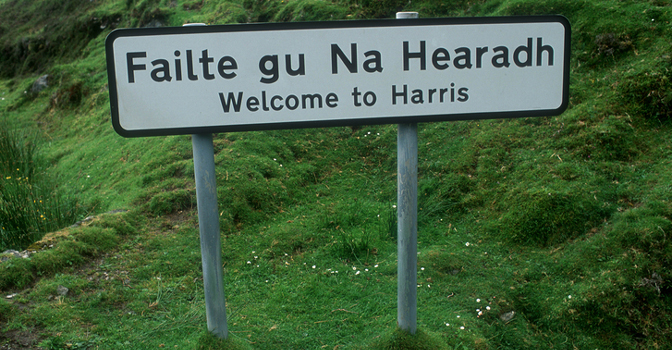
    Distillery coming to Na Hearadh


    Good news today from BBC Alba that permission has been given for a new distillery on East Loch Tarbert on the Isle of Harris. Eilean na Hearadh for those who don't know is a stunningly beautiful and rugged island but one with an ageing population and few job prospects for locals. The Isle of Harris Distillers company are hoping to create up to 20 jobs. This is major employment for an area that usually sends its youngsters to the mainland for employment or further education.

    Its also good to see our uisge-beatha being made again in our Gaelic-speaking heartlands. Further up the coast is an Abhainn Dearg whose first 3-year old malt was recently released on the world. Unfortunately, the price as £150 for only 50cl is a bit steep. Having tasted some Abhainn Dearg 9 month old spirit earlier this year which was best described as 'interesting but rough', it's probably fair to say that AD is a work in progress.

    There are also the persistent rumours of a distillery in Barra. Uisge-Beatha nan Eilean has apparently been raising funds for some years now and secured planning permission. However, its 'distillery' appears to be little more than a windswept moor at this point in time. Ditto, the late Sir Iain Noble's plans for a new distillery at Torabhaig on Skye's Sleat peninsula. Another Skye malt would be very welcome.

    Here's hoping that there's a new 'archipelago' of island malts which we can savour in years to come as well as a new clutch of distilleries to visit.

    Monday, 18 July 2011

    Several Inches of pleasure

    Inchgower must be one of the most underrated of all malts. It is not difficult to purchase from online sources but not much seems to be made of this joy of a whisky though I have yet to taste a mediocre dram from this distillery. Independent bottlings seem to make up most of its available public presence. As most of it goes into Bells, not much more that 1% actually makes it to a single malt. The first time I encountered it though was via the Flora and Fauna bottling released by its owner Diageo. Bottled at a 'low' 43% it was nevertheless a fine dram with a long slightly salty finish that seemed to bungee back to the tongue after you thought it was all over.

    From there, things moved onto a 11yo single cask bottling from Cadenheads which came in at a healthy 61%. A fruity nose with some salt gives way to a creamy palate before finishing like salty throat pastilles.

    There was no way I was gonna fork out £250 odd for Diageo's 'Manager's Choice' offering. However, thanks to a Jolly Toper tasting in Edinburgh, I got the chance to try this expensive wee gem. Superb stuff indeed. But was it any better than the Cadenhead's one at £40ish?

    The Bladnoch Forum bottlings were always excellent value for money and the 28yo from hogshead 6965 at 50.4% didn't disappoint. Great nose - like spilling mango smoothie on a machair meadow. Another reviewer thought the palate was like eating lemon meringue pie with a metal spoon. I'd go with that but replace the metal spoon with a dollop of molasses. The finish is smooth like a lemony Baileys. Very tasty.

    Bladnoch as previously mentioned was kickstarted by Raymond Armstrong. Now, his son is in on the business and sells a few casks and bottles under the name of Whisky Broker. He seems to be continuing the trade in good value but good quality whisky if his Inchgower 36yo  for a mere £50 is anything to go by. Other 36yo bottlings from the same batch go for between £75 and £115. This one is from hogshead 7756 and was distilled way back in 1974. A review of a 'sister cask' isn't far of the mark for this one either. Here the nose is a mixture of lemon and honey. Palate is very smooth but light and citrus with some metallic notes and yon Inchgower salt. Finish is medium to long with some grass and brown sugar.

    The only Inchgower that I haven't been that impressed with was the Scotch Malt Whisky Society's 'Hippie Dram' and that's probably because of the high benchmark set by other bottlings.

    Inchgower is an intruiging dram that rarely disappoints and one that I look forward to tasting a lot of in the future. Lastly, here are some interesting articles which give more background to the distillery and status of this whisky:

    Loch Fyne Whiskies Stocks Inchgower Dewar Rattray 1974 36yo - Scotch Whisky News


    Saturday, 21 May 2011

    Daftmill - strange topography and a new Fife malt


    Fife is a strange place. It houses Scotland's oldest university which is also the one of choice for those who don't make it to Oxbridge. It's East Neuk is hoachin' with beautiful old fishing hooses that have been turned into potteries and galleries. The fishwives are thin on the ground these days. Fife was also the only constituency ever to return a Communist MP to the Westminster parliament. It still had a few Communist councillors until recently. It also sent hundreds of volunteers to fight Franco and the rise of fascism in '36 Spain. No reds in today's East Neuk though... Fife like most of Scotland has embraced Salmond's vision for our nation.

    Fife now has its own malt whisky distillery - Daftmill - named after a quirk in the local topography whereby the Daft Burn appears to run uphill. Daftmill is actually a working farm though its relationship to the whisky industry is not a new one. For years it has sold award-winning barley to various key players in the industry including Macallan. It maintains that operation but is now operating on a 'traditional' basis. Tradition has it that in the auld days, farmers would, once the season of toil was over turn their hand to whisky distilling during the winter months. This is the plan for Daftmill anyway. 

    Daftmill started distilling in 2005. The oldest whisky currently maturing is 4 years old. Fine stuff it is too. Most of it is in first fill bourbon casks though there are some sherry around. Some new distillers, including a certain small Islay enterprise, have due to the pressures of investment, rushed out new spirit as well as 3 year old bairns. Daftmill hope to wait until ten years before releasing the fruits of their labour onto the market.

    The setting for this farm distillery is superb. A large millpond is visible on the approach to the farm steading. Various old buildings have been redeveloped and now house washbacks and stills. An auld byre now acts as the treasury.

    Daftmill don't do 'distillery tours' as of yet but a polite email or phone call to the Cuthbert family who have farmed here for six generations could result in an invitation to view the new enterprise. In the company of an interested German whisky connoisseur and tour operator, I get an indepth viewing from grist to cask sample. Funnily enough, we are told that visitors are few and far between. Surprisingly, certain well known writers in the whisky world have yet to knock on the door. 


    This is certain to change as the date for the first bottling gets closer. I for one feel privileged to have tasted Daftmill in its infancy.


    Daftmill will be aiming to produce a classic Lowland malt, matured in bourbon casks. We're told that a Rosebank type malt is something that is aimed for. Whatever, we get the current full menu of new make spirit, bourbon and sherry. All are superb.


    The sherry cask was my personal favourite though it was probably just a scrotal hair ahead of the bourbon in quality. The other two disagreed. The Daftmill sherry at 4 years old reminded me a lot of Aberlour's lip-smacking A' Bunadh. It has a full, sweet and viscous palate. There was something musty about it too - like an old library with antique leather chairs. Absolutely delicious. If I were to hazard a comparison with other drams then the aforementioned A' Bunadh would be there along with the Gordon & MacPhail 12yo Imperial and possibly even the Edradour Natural Cask Strength.

    The bourbon cask was altogether different - lighter and with the expected vanilla and toffee flavours. I was reminded of a Glenkinchie cask strength that I had tried though this didn't find favour with Mr.Cuthbert. He preferred Rosebank as a comparison.

    I won't bother regurgitating the history of Daftmill here - their website provides all of that. Should the opportunity present itself though, go and visit it. I for one would welcome the chance to taste a 6 or 7 year old from the cask. Its refreshing to meet ordinary Scots who have the vision and balls to go out and create something of quality. Independent distilleries are very much to be supported. I'm sure that all this fits well into the 'new' Scotland and Salmond's own vision.


    Daftmill website